The Brendan Sorsby Injunction Could Change College Football More Than Any Transfer Portal Rule
A Texas judge overruled an NCAA eligibility decision involving Texas Tech quarterback Brendan Sorsby. The ruling could have major implications for gambling enforcement and NCAA authority across college football.
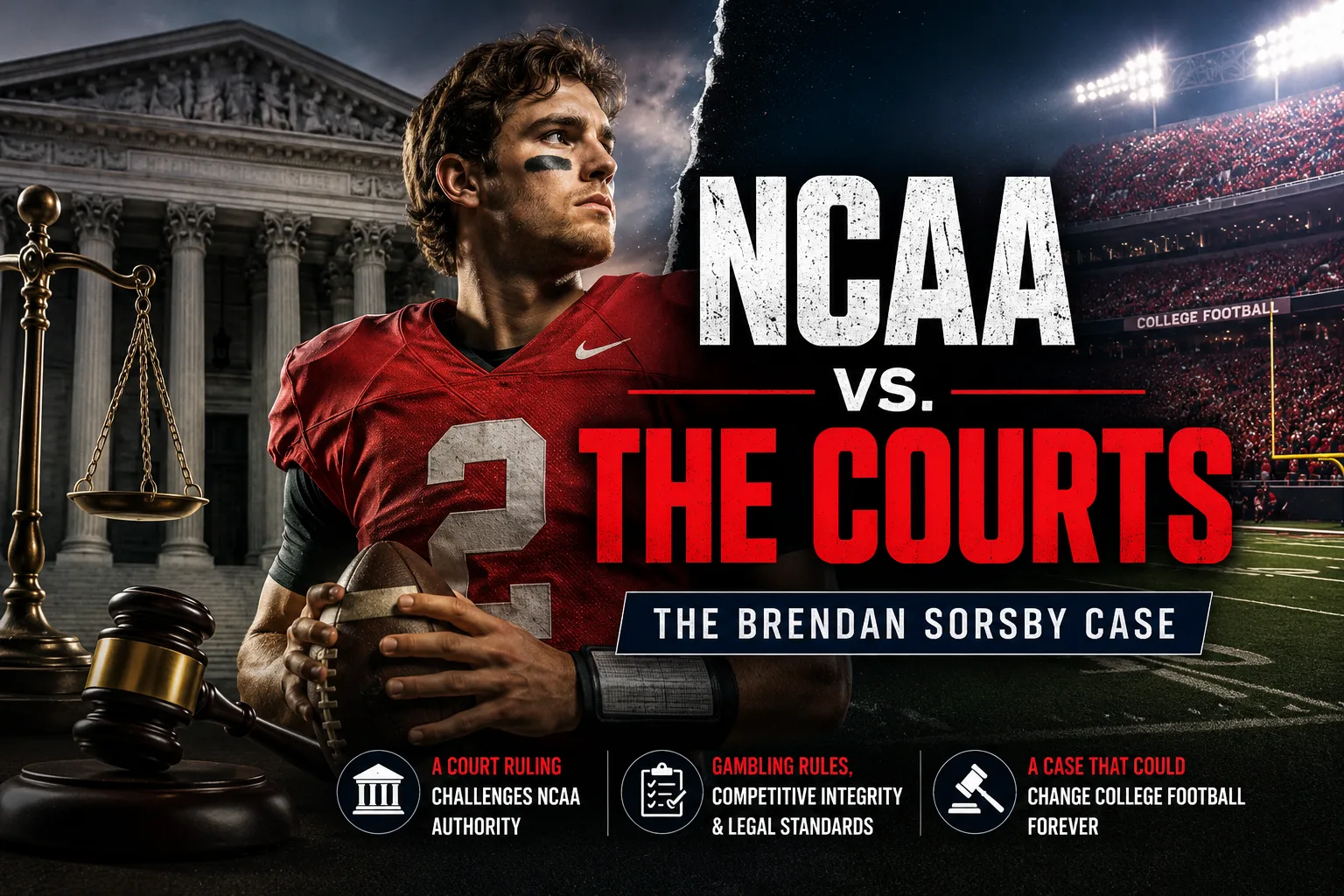
The Brendan Sorsby Ruling Could Become One of the Most Important NCAA Cases of the Year
A Texas judge’s decision to restore Texas Tech quarterback Brendan Sorsby’s eligibility may ultimately have consequences far beyond the Red Raiders’ 2026 season.
Earlier this month, a Lubbock County judge granted a temporary injunction allowing Sorsby to compete while he challenges an NCAA ruling that would have otherwise ended his college football career. The NCAA had declared Sorsby ineligible after determining that he violated its gambling policies by placing thousands of sports wagers totaling approximately $90,000 while he was a college athlete. According to reports, some of those wagers involved games connected to Indiana, where Sorsby previously played before transferring to Texas Tech.
The ruling does not permanently overturn the NCAA’s decision, and the legal battle is far from over. The NCAA is expected to continue appealing the case. Even so, the injunction immediately changes both Texas Tech’s outlook for 2026 and the broader conversation surrounding NCAA authority.
At a time when courts have repeatedly challenged NCAA rules governing transfers, athlete compensation, and eligibility, the Sorsby case raises a question that once would have seemed unthinkable: if courts are willing to intervene even in gambling-related cases, what areas of NCAA enforcement remain beyond judicial review?
The Arguments on Both Sides
The NCAA’s position is relatively straightforward. Gambling violations occupy a unique place within college athletics because they have the potential to undermine confidence in the legitimacy of competition itself. The association has long maintained that strict enforcement is necessary not only to punish violations but also to deter future misconduct and preserve public trust in the games, an issue that has become more visible as college football betting has moved closer to the mainstream fan experience.
Sorsby’s legal team, however, is not arguing that NCAA gambling rules should not exist. Instead, their challenge focuses on whether the punishment fits the circumstances of the case and whether the NCAA’s enforcement process was reasonable. Court filings and public statements have emphasized the long-term consequences of a permanent loss of eligibility, including the impact on Sorsby’s professional opportunities and earning potential. His attorneys have also pointed to his efforts to address gambling-related issues and argue that the NCAA failed to adequately consider mitigating factors.
That distinction matters. The case is not simply a debate over whether athletes should be allowed to bet on sports. It is increasingly becoming a debate over how much discretion the NCAA should have when determining penalties and whether courts should step in when athletes believe those penalties are excessive.
Why Gambling Cases Have Always Been Different
Unlike disputes involving NIL compensation or transfer restrictions, gambling violations strike at the heart of competitive integrity. Fans may disagree about how much athletes should be paid or how freely they should be allowed to transfer, but they generally expect every game to be contested honestly.
College sports has painful historical examples of what happens when that trust is compromised.
The most infamous example remains the 1951 college basketball point-shaving scandal, which implicated dozens of players across multiple programs and shook public confidence in the sport. More recently, Arizona State’s football program became embroiled in a sports gambling investigation in the 1990s involving players who allegedly provided information to bettors. Even when games themselves are not manipulated, the perception that athletes may have financial interests connected to betting markets creates concerns for governing bodies.
That history helps explain why the NCAA continues to view gambling differently than most other rule violations. From the association’s perspective, maintaining confidence in the integrity of competition is not simply another administrative responsibility—it is foundational to the entire enterprise.
At the same time, the modern sports landscape has become increasingly complicated. Sports betting is now legal in many states, sportsbooks advertise heavily during broadcasts, and betting odds are routinely integrated into pregame and halftime coverage. Critics argue that athletes are being asked to navigate an environment saturated with gambling promotion while facing severe consequences for conduct that society increasingly treats as mainstream entertainment.
Why Texas Tech Has So Much at Stake
Beyond the legal questions, the ruling carries significant football implications.
Sorsby is not a backup quarterback fighting for a roster spot. He is expected to be one of the most important players on a Texas Tech team with legitimate Big 12 championship aspirations. After emerging as one of the conference’s most experienced quarterbacks, he entered the season as a central piece of the Red Raiders’ offense and a key reason many analysts viewed Texas Tech as a potential contender.
Had the NCAA’s ruling remained in place, Texas Tech would have faced the prospect of replacing its starting quarterback just months before the season. The injunction immediately changes that outlook and restores stability to one of the conference’s most important positions.
That reality has contributed to the strong reactions surrounding the case. Opposing fan bases, coaches, and administrators are not merely debating abstract legal principles. They are watching a ruling that could directly influence competitive outcomes on the field, including the shape of the Big 12 team leaderboard and the national rankings picture.
A Test Case for the NCAA’s Future
The most significant aspect of the Sorsby case may not be the final verdict but the precedent it could establish.
For decades, NCAA eligibility decisions were generally considered final. Athletes could appeal internally, but courts rarely became active participants in the process. That environment has changed dramatically. Over the last several years, judges have increasingly scrutinized NCAA rules and shown greater willingness to intervene when they believe athletes may suffer irreparable harm.
If the NCAA ultimately prevails, the organization will reinforce its ability to enforce gambling rules without substantial judicial interference. If Sorsby succeeds, however, future athletes facing eligibility sanctions may become more willing to challenge NCAA decisions in court rather than relying solely on the association’s appeals process.
The broader question extends well beyond one quarterback and one season. College athletics is already navigating unprecedented change driven by NIL, revenue sharing, conference realignment, and ongoing legal challenges. The Sorsby case adds another layer to that transformation by testing how much authority the NCAA still possesses when its decisions are challenged before a judge.
The answer may shape more than the future of gambling enforcement. It may help determine whether the NCAA remains college sports’ ultimate governing body or increasingly becomes one voice among many competing institutions, courts, and stakeholders trying to define the future of the sport.
As appeals move forward, the central question is no longer whether Brendan Sorsby will play football in 2026. For now, that answer appears to be yes.
The more important question is what happens the next time an athlete challenges an NCAA ruling—and whether this case becomes an exception or the beginning of a new normal.